 Muscle spasms feel sudden and intense. One moment everything is fine, and the next your muscle tightens and refuses to relax. It can happen in the neck, back, or legs, often without a clear reason. The body reacts this way when muscles become overloaded, stressed, or fatigued. A spasm is basically a muscle stuck in contraction. It tightens and cannot release properly. That creates pain, limits movement, and makes even simple actions uncomfortable.
Why Muscle Spasms Happen In The First Place
Spasms often come from a mix of physical and nervous system factors. Overuse, poor posture, dehydration, or stress can all trigger them. When muscles are used too much or held in one position for too long, they accumulate tension. At the same time the nervous system may keep sending signals that maintain that tension. This creates a loop where the muscle stays tight even when it no longer needs to be. Blood flow also decreases in that area, which makes it harder for the muscle to recover on its own.
How Massage Breaks The Tension Cycle
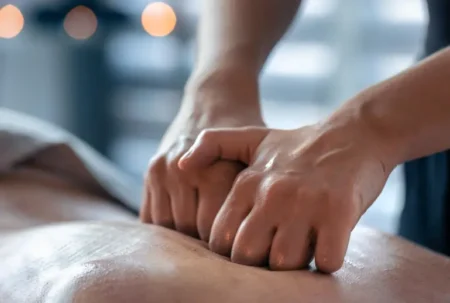
Massage works directly on both the muscle and the nervous system. When pressure is applied to a tight area, it helps increase blood flow. That brings oxygen and nutrients into the muscle while removing waste that builds up during tension. At the same time, massage signals the nervous system to relax. The body shifts from a state of alertness into a calmer mode, which allows the muscle to release. This combination is what helps break the cycle of contraction that causes spasms.
Why Blood Flow Matters For Muscle Recovery
When a muscle is in spasm, circulation in that area becomes restricted. Without proper blood flow, the muscle cannot fully relax or repair itself. Massage helps restore that circulation. As blood flow improves, the muscle receives what it needs to recover. The tissue becomes softer, movement improves, and pain decreases. This process does not always happen instantly, but even one session can reduce the intensity of a spasm.
How Regular Massage Prevents Future Spasms
Massage is not only useful after a spasm appears. It can also help prevent them. When muscles are regularly relaxed and circulation stays active, tension does not build up to the same level. The body becomes more flexible and less reactive to stress or physical strain. This is especially helpful for people who sit a lot, work in repetitive positions, or experience frequent stress. Keeping muscles in a relaxed state reduces the chance of sudden tightness.
Why The Nervous System Plays A Key Role
Muscles do not act alone. They respond to signals from the nervous system. When the body is under stress, those signals often increase tension even without physical effort. Massage helps calm that system. Breathing slows down, heart rate decreases, and the body shifts into a recovery state. Once the nervous system relaxes, muscles follow. This is why massage often feels calming not just physically but mentally as well.
What Relief From A Spasm Feels Like
When a muscle finally releases, the change is noticeable. Movement becomes easier, pain fades, and the body feels lighter. You stop adjusting your posture to avoid discomfort. Instead of constant tension, there is a sense of freedom in the affected area. Massage helps guide the body back to that state. It does not force the muscle to relax. It creates the conditions where relaxation can happen naturally, which is why the effect feels both physical and deeply relieving.
Picture Credit: Freepik