
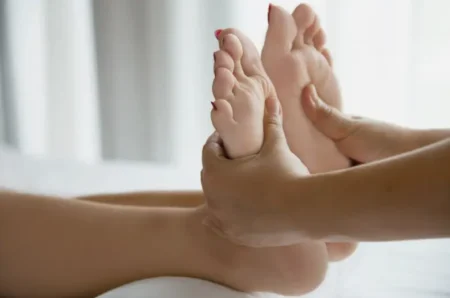
 After a long day, you feel it first in your feet. They carry your body the entire time, yet get the least attention. Foot massage seems like a simple comfort, but it affects much more than local fatigue. Your feet contain many nerve endings, which are sensitive points connected to different parts of the body. When you apply pressure and movement to these areas, the effect travels beyond the feet. You feel relief not only in muscles, but also in overall tension and even mental stress.
How Foot Massage Relieves Pain And Tension
Feet absorb constant pressure from standing, walking, and even sitting in poor posture. Over time this creates tightness in muscles and connective tissue. You may notice soreness in the heels, arch, or toes. Massage helps release that built-up tension. By applying pressure to tight areas, it improves circulation and allows muscles to relax. Once the tension in the feet decreases, the effect often spreads upward. The legs feel lighter, and even lower back discomfort can reduce because the body’s support base becomes more balanced.
When Foot Massage Is Especially Useful
Foot massage becomes especially helpful when certain problems appear. People who stand for long hours often experience swelling and fatigue in the feet. Massage helps move fluid and reduce that heavy feeling. It is also useful for those with plantar fasciitis, which is a condition where the tissue in the bottom of the foot becomes inflamed and painful. Gentle massage can help reduce stiffness and improve flexibility in that area. Athletes and active individuals also benefit because their feet take repetitive impact, which creates tension that needs to be released regularly.
Why Circulation Improves Through Foot Massage
Good circulation is essential for healthy tissue. When blood flow is limited, muscles and tissues do not receive enough oxygen and nutrients. This can lead to fatigue, cold feet, or slower recovery after activity. Foot massage stimulates circulation by mechanically pushing blood through the tissues and encouraging fresh flow back into the area. As circulation improves, the feet feel warmer, lighter, and more responsive. This effect can be especially noticeable for people who sit for long periods or have limited movement during the day.
How Foot Massage Affects The Nervous System
Foot massage does more than relax muscles. It also influences the nervous system. Gentle, repetitive pressure signals the body to shift into a calmer state. Breathing slows down, and the overall level of tension decreases. Because the feet are rich in nerve endings, this effect can feel stronger compared to other areas. Many people notice that even a short foot massage helps them relax mentally, not just physically. It creates a sense of grounding, which makes the body feel more stable.
Why Regular Foot Care Prevents Bigger Problems
Ignoring foot discomfort can lead to bigger issues over time. When the feet are tense or painful, the body adjusts posture to compensate. This can create strain in the knees, hips, and lower back. Regular foot massage helps keep muscles flexible and reduces the need for these compensations. It supports better alignment and movement. Taking care of your feet is not just about comfort. It affects how your entire body functions.
What A Good Foot Massage Feels Like
A proper foot massage creates a gradual release. At first you may feel tight or sensitive spots, but as pressure continues those areas soften. The feet begin to feel lighter, movement becomes easier, and the body relaxes as a whole. Afterward, walking feels different. There is less resistance, less fatigue, and a noticeable sense of ease. It is a simple practice, but its effect goes far beyond the feet themselves.