
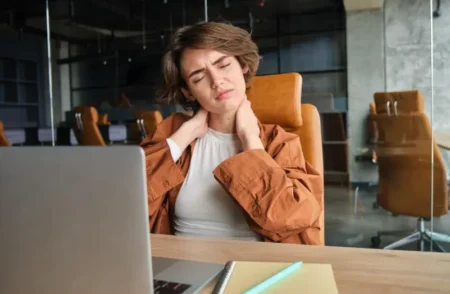
 Neck pain rarely starts in the neck alone. It builds from posture, stress, long hours at a screen, and shallow breathing. The neck ends up holding tension that actually began in the shoulders, upper back, or even the jaw. When that tension stays for days or weeks, stiffness turns into pain.
Massage helps because it addresses the muscles that are constantly overworking.
Why The Neck Gets So Tight
The neck supports the weight of your head all day. When posture shifts forward, even slightly, pressure increases dramatically. Muscles at the base of the skull and along the sides of the neck tighten to compensate.
Stress makes it worse. When you’re anxious or focused intensely, shoulders rise, jaw tightens, breathing becomes shallow. The neck absorbs that tension automatically.
What Massage Does For Neck Pain
Massage improves blood flow to tight areas and reduces muscle guarding. Guarding is when muscles stay contracted as a protective response. Over time, that protective state becomes habitual.
By applying controlled pressure and movement, massage signals the nervous system that it’s safe to relax. This lowers pain sensitivity and improves mobility.
Surrounding Areas Matter
Effective neck massage rarely focuses only on the neck. Upper back, shoulders, chest muscles, and even scalp tension all influence how the neck feels.
Tight chest muscles pull the shoulders forward. Weak upper back muscles fail to support posture. The neck ends up compensating. Releasing surrounding areas often provides longer relief than working the neck alone.
Pressure Should Be Controlled
Aggressive deep pressure can irritate the neck. The cervical spine area is sensitive and contains important nerves and blood vessels. A good massage feels firm but safe. You should feel release, not sharp pain.
Mild soreness afterward can happen, but worsening pain is a sign to reassess.
Massage Helps With Headaches Too
Many tension headaches originate from neck and upper shoulder tightness. Muscles at the base of the skull, when tight, can refer pain upward into the head.
Releasing these areas often reduces headache frequency and intensity over time.
Massage Is Relief, Not The Whole Solution
Massage reduces pain and improves movement, but posture and daily habits determine whether the pain returns. Screen height, sitting position, breaks during work, and strengthening exercises all matter.
Massage creates space for change. It doesn’t replace it.
When To Seek Medical Advice
If neck pain includes numbness, tingling, weakness in the arms, or severe radiating pain, medical evaluation is important. Massage can help muscular tension, but nerve-related issues require proper diagnosis.
Neck Pain Often Signals Overload
Most neck pain isn’t structural damage. It’s overload from repetitive strain and stress. Massage lowers that load by calming muscles and the nervous system.
When combined with better posture and movement habits, it turns recurring pain into manageable tension. Relief comes not from forcing the neck to relax, but from giving it permission to stop working so hard.
Picture Credit: Freepik